


 Why Voicescape?
 Meet the Team
 Careers
 Environmental Policy



 Blogs
Blogs Whitepapers
 Events
 User Groups



Local Government Reorganisation (LGR) and rising housing demand are reshaping the operational landscape for housing teams across the UK. Whilst the full changes of LGR is yet to be seen, smaller councils are already preparing for full organisational change, including mergers.
More local authority housing teams are already using technology to strengthen how they work and plan for the future, and have seen much success in improving their income operations (see council results section). In this blog, we will delve into how organisations are scaling their services confidently through the power of technology and why innovation matters, now more so than ever.
Contents
- How teams and systems are brought together through LGR
- Innovating during a time of change: how to make a quick impact
- How we've helped councils make a difference
How teams and systems are brought together through LGR
Local government is experiencing a cultural reset; one that can help enable system-led change. From authorities we’ve spoken with, there is concern around what LGR means for arrears. Despite this arrears risk in the short-term, LGR does in fact provide the long-term opportunity to change how councils manage arrears for the better – providing more continuity in arrears management and opportunity to develop income recovery models. Another side effect of LGR is larger collection expectations and targets that require a “spend-more-to-save-more” mindset without growing resource to the same extent. Building on this idea, it is important to recognise that change is sometimes necessary to adapt, especially with LGR imminent. Teams can achieve their targets and avoid having their organisation stripped back with Section 114 by investing in a new solution that can help them save towards a more financially sustainable future.
This is where systems and teams can be brought together. Whilst there may be short-term complexities of aligning teams, long-term this will pave the way for more resilient housing services. Using technology is not about radical change or transformation; it’s a sensible, incremental response that many housing teams are already exploring to get ahead of LGR early.
Innovating during a time of change – how to make a quick impact:
Teams are combining, roles are doing more, people are collecting debt they have not been collecting before: the desire for innovation is strong and commercially vital. To address the changes LGR brings, housing teams are required to accomplish more with less. But how can you make a larger, faster impact on your arrears and cases? The answer: technology. Higher demands are not a deficit but rather an opportunity to work differently and be more capable than ever. This is why housing teams are utilising technology to extend team capacity rather than replace expertise.
Through our customisable income solutions, Voicescape can make a quick impact shortly after implementation to assist teams and make roles more manageable in the long-term. Having delved into the change timelines for LGR and legislative landscape changes in our LGR guide, we understand that the service expectations this brings are monumental. Housing teams that are underpinning their services with technology are demonstrating that times of change do not need to affect performance. Through the LGR process, there is potential for better financial resilience and a better overall tenant experience.
How Caseload Manager reduces caseloads and increases both capacity and collections:
Introducing our award-winning solution for handling your caseloads in arrears, Voicescape Caseload Manager - transforming arrears management into a proactive, intelligence-led process.
|
Why automation and the power of voice is helping housing teams scale income collection
Voicescape’s automated engagement platform, Collections, allows income teams to connect with the right tenants at the right time, through the right channels. This turns a usually time-intensive outbound calling activity into efficient inbound calls, promoting tenants to take financial action and self-serving.
|
Voicescape is ideal for bringing councils together as it provides a comprehensive, flat one-way of working. Introducing technology services and systems could be a part of your migration journey; rather than simply an add-on to scale.
Interested in seeing how sector peers are applying technology to improve income recovery? See the results Thurrock Council and Luton Borough Council have achieved using our income solutions below.
How we’ve helped councils make a difference
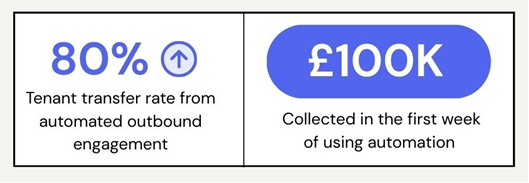
Thurrock Council boost tenant engagement to 80% and collect £100K+ in their first week with automationHeadline results at a glance:
|
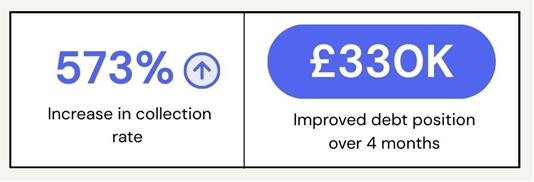
How Luton Borough Council are tackling FTA when faced with a trend of £1M annual increaseHeadline results at a glance:
|
Voicescape technology is adaptable to the changing needs of local authorities, as well as social housing.
If you want to hear from other housing teams who have driven success with new technology, discover the latest Income Innovation events we have coming up below.
Our upcoming Income Innovation Day
Our upcoming events and conferences are the perfect opportunity to meet like-minded individuals and other local authorities facing LGR. Here, you can learn how new technology can support your arrears management strategies, and network with organisations that have implemented digital innovations and are now seeing impactful results.
Join us at our next Income Innovation Day in Manchester on the 26th of February 2026, here: Register your Interest