


 Why Voicescape?
 Meet the Team
 Careers
 Environmental Policy



 Blogs
Blogs Whitepapers
 Events
 User Groups

.jpg)

Earlier last month, we welcomed leading housing professionals to our Income Innovation Day in London, bringing together organisations from across the sector to share how they are responding to the growing challenges facing income services. Managing income collection has become increasingly complex in recent years. The ongoing cost of living pressures, rising rents and the evolving welfare landscape mean that more tenants require support, while conversations around arrears, affordability and Universal Credit often demand greater time and resource from frontline teams.
During the event, we heard from Birmingham City Council, Salvation Army Homes and mhs homes who shared their experiences of transforming income services through the adoption of innovative technology. Their presentations highlighted tangible reductions in arrears and caseloads, alongside improvements in efficiency and tenant engagement.
A consistent theme emerged throughout the day: the importance of having flexible, intelligent technology that can adapt to changing operational demands. Solutions such as Voicescape’s award-winning Caseload Manager solution are helping these organisations prioritise resources more effectively, engage tenants at scale and deliver better outcomes in an increasingly challenging environment. We even shared some of our benchmarking stats that our customers are beginning to see...
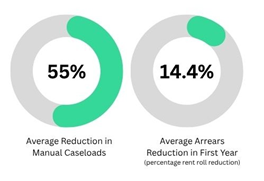
Innovative Technology in Practice: Customer Feedback on Voicescape Caseload Manager
Birmingham City Council
Birmingham City Council's income service was operating in an increasingly challenging environment. Following the council's Section 114 notice, there was a greater need to scrutinise processes, improve efficiency and ensure resources were being directed where they could have the greatest impact. Teams faced capacity constraints, high volumes of repetitive administration and limited visibility of cases and arrears, making it difficult to prioritise workloads and support tenants effectively. With significant pressures across both rent and temporary accommodation debt recovery, it was clear that a more structured, data-driven approach to case management was needed.
Following demonstrations and workshops with frontline teams, Birmingham City Council selected Caseload Manager as the solution best aligned to its operational requirements. The platform introduced automation, prioritisation and engagement tools that reduced manual intervention, improved workflow management and provided greater visibility of performance. The impact has been significant, with the council achieving a £1.3 million reduction in arrears year-on-year from a previous arrears position of £11.6 million. Verification cases also reduced by 99%, falling from more than 16,000 cases to just 170 through a combination of automation and process improvement. Reflecting on the project, the team emphasised the importance of engaging stakeholders early, involving IT and operational teams throughout the process, and ensuring managers and frontline staff are included from the outset.
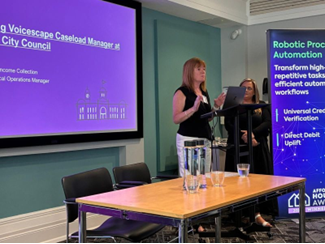
“We chose Caseload Manager not just to increase our income, but to support our residents and improve our staff’s ways of working” – Maria Johnson, Technical Operations Manager, Birmingham City Council.
Salvation Army Homes
Salvation Army Homes set out to improve arrears performance while supporting residents facing increasing financial pressures and complex life circumstances. With a small income team managing growing demand, the organisation needed a more consistent and proactive approach that would create capacity, strengthen early intervention and support its ongoing transformation programme, without losing the human element of resident engagement.
By implementing Caseload Manager, Salvation Army Homes shared how they were able to automate routine activity and give officers more time to focus on residents who needed additional support. The organisation was particularly attracted to the ability to engage residents early with messaging that reflected its values and tone of voice. The impact was quickly realised, with current tenant arrears reducing by 33%, officer caseloads falling by 71%, money advice support increasing by 42%, and resident income interventions reducing by 75%. A key lesson shared during the session was that residents in debt often need support, not just collection activity, and that respectful, timely engagement can make a significant difference to outcomes.
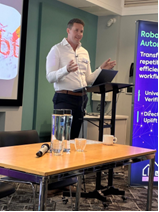
“It allowed us to spend more time solving problems with residents, not just chasing debt... our Lead IT officer described it as the best project he’d been involved with.” – Salvation Army Homes
mhs homes
mhs homes had reached a point where further improvements in income performance were becoming increasingly difficult to achieve through existing processes. Arrears had remained largely static, fluctuating between 4.04% and 4.11%, while the organisation was incurring significant costs for a solution that was limited in scale. With projected improvements failing to materialise and business requirements evolving, the team recognised the need for a more consistent and intelligent approach to income management.
Matthew Eddy, Business Improvement Manager, shared that their awareness of Voicescape in the market provided an opportunity to move away from what was described as a frustrating "to do list" approach to case management and adopt a solution driven by analytics and prioritisation. By involving officers in early demonstrations and securing buy-in from the outset, mhs homes achieved a smooth implementation and quickly established greater consistency across its income service. The results included a 33% reduction in arrears, (from 4.11% to 2.73%), a 44% reduction in case volumes and a £1.1 million improvement in income performance. The team also highlighted that only 5.2% of recommendations required manual review, demonstrating confidence in the approach. Reflecting on the journey, they emphasised the importance of giving officers time to build trust in AI-driven processes and ensuring strong data quality to maximise outcomes.
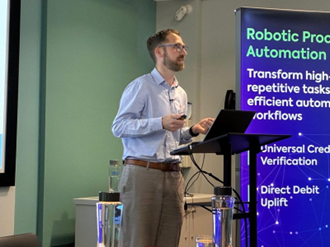
“It has been so easy to work with Voicescape and get Caseload Manager implemented. It has been beneficial for self-serving a lot of things on the front end.” – Matthew Eddy, Business Improvement Manager at mhs homes group
Each organisation that spoke at the Income Innovation Day are facing their own unique challenges, but a common theme emerged throughout the day: by adopting a more intelligent, data-driven approach to income management with Caseload Manager, they were able to improve efficiency, reduce arrears and create greater capacity for meaningful resident engagement.
Join us for our next Income Innovation Day
If you found these insights valuable, keep an eye on our events page for details of the next Income Innovation Day. These sessions bring together income professionals from across the sector to share experiences, explore emerging challenges and discover practical approaches to improving income performance.
Can’t wait for the next day to get started? Book a demo here.